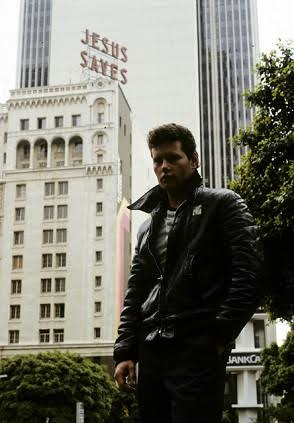

GAME OVER: KASPAROV AND THE MACHINE
Documentary featuring Garry Kasparov
released: 2003
.
Did GARRY KASPAROV, the world’s greatest chess player, get rooked when he lost a six-game match to IBM’s supercomputer, DEEP BLUE, in 1997? That’s the question that this padded but nonetheless interesting documentary asks you to consider.
.
I wasn’t even aware of GAME OVER: KASPAROV AND THE MACHINE until I stumbled over it while Amazon surfing last week. When I was unable to locate a VHS rental copy, I actually bought my first DVD player (NOT made in China, India, or Indonesia) just so I could view this.
.
If you have little or no interest in chess (the world’s greatest game!) then there is no chance you’ll find watching the 85 minutes of GAME OVER well spent. On the other hand, if chess fascinates or even interests you, you’ll find the movie flawed but somewhat intriguing.
.
I got into chess as a result of the high profile 1972, Fischer versus Spassky match. Later in 1972, I joined the chess club at my junior high school and won the club championship in a three-game match. (But interestingly, the player who most intimidated me was blind. He was a “Chess Game Wizard.”) Back then, I wanted to be ranked a Master by the age of 16, but other interests began vying for my time and attention: art, girls, and sports and/or the art of watching girls in shorts play sports! I never became more than mediocre at best in chess, but I never lost all interest in it either. Nor in watching girls play beach volleyball. : )
.
Of this movie’s hour and a half running time, likely 50% of it is unnecessary filler. We get shots of Kasparov revisiting the locales less than 10 years later; the same footage over and over of an old chess-playing contraption; shots of New York City ad nauseam, etc. As Christopher Lloyd said in the movie One Flew Over The Cuckoo’s Nest: Cut the bullshit; play the game! A little atmosphere is fine, but too much of it slows down an already slow contest.
.
The crux of Kasparov’s argument follows: After beating DEEP BLUE handily in Game One, in which the computer played a very mathematical, machine-like style, it made a “creative judgment” in Game Two which the man, Kasparov, was certain could only be made by a “man”. Subsequently, he became so unnerved -- convinced that a human mind was responsible for that move (i.e., he was playing against not just a computer, but also against one or more unseen Grand Masters behind the scenes) -- that he prematurely conceded Game Two, which possibly cost him a draw and ultimately the match.
.
If chess were purely mathematical, I -- the most mathematically-challenged person on the planet -- would have never won a game. There are rich, creative and psychological elements to chess -- it is NOT strictly mechanical, not just “black and white”, despite the colors of the pieces. It is closer to music than it is to algebra. I have no math skills whatsoever, but I’m extremely analytical and I naturally discern patterns in things. And I can be quite a fearsome psych warrior! As a novice playing against novices, I frequently swapped queens when the only advantage to me was psychological: beginners -- and even some half decent players -- will mentally surrender once they’ve lost their queen. But I KNEW I could win without her, and it only made me bear down and concentrate more. I’ve always been at my best under pressure. But does a computer “got game” when it comes to those additional chess factors?
.
When in Game Two, KASPAROV offered up a pawn (or two?) in order to gain a positional advantage in another sector of the board, and DEEP BLUE declined to take the piece, Kasparov became suspicious and lost his composure. It was as if a dog passed up ground beef because it “speculated” that there might be filet mignon three blocks away. Is a dog (or computer) capable of that kind of “thought”? Or will it immediately take the first gift offered? How can it sniff out a stratagem from a mistake? Well, Deep Blue saying, “Thanks, but no thanks” made Kasparov deeply blue. The rest is history.
.
I really wish that the filmmaker had dispensed with 15 minutes of superfluous “atmosphere” shots and spent it really analyzing that key move in Game Two. (One of the DVD’s Special Features replays all of the games with very basic commentary on each move, but no mention is made of the questionable moment in Game Two or of the importance it held.)
.
What was Kasparov really attempting to accomplish by sacrificing a pawn or two? How obvious was the advantage in position that he would have gained? How much “creative thinking” did Deep Blue have to perform in order to “see through the ground beef”? How did the computer go from mechanical playing to “humanistic” playing overnight? Was IBM playing chess games with Kasparov, or playing mind games with him? You’ll never know until you check, mate!
.
~ Stephen T. McCarthy
.
