.
.
SOUTHERN CALIFORNIALAND
by Charles Phoenix
2004
.
[*Lyric from the song, 'HOTEL CALIFORNIA' by The Eagles.]
.
I acquired SOUTHERN CALIFORNIALAND by Charles Phoenix just over a week ago in a Christmas gift exchange game. The book is a true celebration of Southern California in its glorious, paradisiacal decades of 1940 through the 1970s. Charles Phoenix who oddly became obsessed with the old 35 mm Kodachrome slides taken by strangers in memorializing their family trips, gatherings, and everyday lives, shares about 150 of his favorites with us in this absolutely charming book. His love and enthusiasm for his subject (SoCal in its glory days) just oozes from every page. Like the author, I grew up in SoCalLand in the '60s & 70s, and so I share his fascination for the magic that it once held.
.
Enchanting, dreamy, nostalgic, and a tad melancholic (because the enchantment and the dream has been reduced to nostalgia) are words that best describe this picture book. But "surprising" is another word that fits, because I was surprised by the wealth of information to be found in the brief text that accompanies each photograph. Even I - who has traversed so many of these locations - learned some interesting bits of trivia.
.
For example: Did you know that when Vice President Richard Nixon cut the ribbon and became the Disneyland Monorail's first official passenger, unbeknownst to that famous rider, it was the first time the unique transportation train completed a trip without catching fire? Phoenix describes Walt Disney as being very nervous. Yeah, I suppose he was! Did you know that the Luer "Quality Meat" Rocket (a forerunner to the Oscar Meyer Wienermobile) was discovered in a Prescott, Arizona junkyard in 1997, "weathered, but restorable"? (And here I always thought that I was the only good thing to wrench free from the evil clutches of Prescott! I made good my escape in early '94, also "weathered, but restorable".)
.
I loved perusing the lost details of places where I have traipsed: the famous Brown Derby restaurant and the Pan-Pacific Auditorium; White Front of Anaheim, one of the discount chain of stores fo' po' folks. (My Ma used to drag us to one as children in Orange County. I don't know how many the O.C. boasted of, but this might well be the same White Front.); the Pacific Ocean Park amusement park, which I guarded as a young Police Explorer during its demolition in the Winter of 1973-74; the L.A. International Airport Theme Building where I experienced my first Red Dog beer. The beer wasn't memorable, but the location was.
.
Phoenix includes insightful and sometimes funny commentary. When he describes the cover photo (a white, 1955 Cadillac Eldorado Biarritz convertible parked near the corner of Walnut & Allen in Pasadena, with palm trees, an orange grove, and snow-capped Mt. Baldy in the background) as "a perfect Southern California shot", he's right on the money! When he writes of the 1954 Mineral Baths photo in Desert Hot Springs, "Hundreds of thousands of acres of beautiful undisturbed desert scenery and someone had to build a wall around this place and paint in [desert] scenery," it's genuinely funny.
.
This book is a treasure trove for any pre-Hotel California SoCalLand lover. Where else are you going to find a photograph of a 1956 teenager with the perfect ducktail waiting to test Disneyland's Autopia track? Or a photo of President Eisenhower blowing his nose in Palm Springs? Or a photo of Lee and Katie Kellogg eating meatloaf sandwiches in 1955 Alhambra? This book is a vibrant, eye-popping gem of pop culture which I urge you not to buy.
.
I'd rather you didn't purchase this fun Charles Phoenix book. Why? Because on page 144 we learn that SOUTHERN CALIFORNILAND was "Printed in China". Yes, this is the same China that embraces Communism, a failed economic/social system responsible for murdering approximately 100 million human beings worldwide, and torturing and starving many millions more. The same China that enforces its one-child family policy with forced abortions. The same China that got caught smuggling AK-47s into the U.S. to be sold to Los Angeles street gangs; threatened to nuke L.A. if the U.S. militarily defends Taiwan; kills its citizens who have the audacity to publicly request freedom; sells body parts of executed prisoners to medical facilities; enslaves political opponents and Christians for their faith, and puts them to work in forced labor camps, producing all imaginable types of goods, and printing books, all to be sold to Americans.
.
Every time we purchase a Chinese-made product, we are feeding the human rights-abusing monster that has made no secret of its hatred for us - a monster that is increasing its military might at an astonishing rate and will someday overrun its neighbor, Taiwan, and declare war on the United States. Let's have a little foresight for once. Let's stop building our enemies. Let's boycott ALL Chinese products and sleep better at night. SOUTHERN CALIFORNIALAND is a nice book, but until it is being produced in a country that values human life, it's a book that we can LIVE WITHOUT! (Of course, if you're buying a used copy, this is not an issue.)
.
~ Stephen T. McCarthy
.
A blog wherein I review everything from "Avocados" to "Zevon, Warren". Many of these reviews were originally published at Amazon.com and remained there -- some for as long as 12 years -- until some meanspirited woman, a "Bernice Fife" Know-It-All and "Glenda Beck" NeoCon, prompted BigBitch.com to delete them in late 2016.
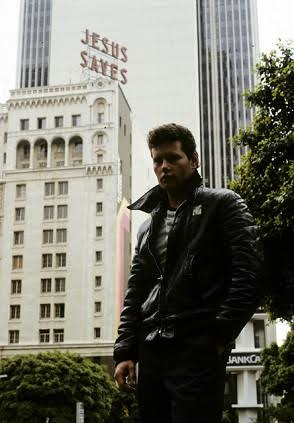
Downtown Los Angeles, circa 1983
STMcC in downtown Los Angeles, circa 1983
Showing posts with label Americana. Show all posts
Friday, August 23, 2019
Monday, April 30, 2018
SURFING WATERS BOTH DEEP AND SHALLOW
.
[This review was written and originally published 2006, March 5th.]
.
.
GREATEST HITS, VOL. 3:
BEST OF THE BROTHER YEARS, 1970-1986
by The Beach Boys
released: Feb. 1, 2000
.
THE BEACH BOYS are one of those bands that have provided the soundtrack to my life. Growing up in Southern California, their music really does become a part of one's experiences.
.
Examples: I can't hear 'Help Me, Rhonda' or 'The Girls On The Beach' without recalling my years of bodysurfing the waves near Santa Monica's Lifeguard Station #26. 'Good Vibrations' automatically transports me back to Santa Monica High School -- located conveniently 2 blocks from the Pacific Ocean. (Sometimes the sound of the surf called more insistently than did the school bell.) Samohi's official school song, 'Hymn Of Praise' written by Ken Darby from the Class of 1927, starts out,
.
Oh Samohi, dear old Samohi
Queen of the setting sun
For you we toil, for you our banners fly
We win for you when victory's won!
.
But every pep rally I attended from '74 through '77 ended more "excitationally" with...
.
Good, good, good, good vibrations
(oom bop bop)
I'm pickin' up good vibrations
She's giving me excitations
(oom bop bop)
.
'In My Room' humorously reminds me of the time in 1986 when I found it on a jukebox in a Reno lounge and drove every other patron out of the place with it. I was in the bartender's doghouse, but what are ya gonna do with a liquidated cowboy who wants to hear 'In My Room'... 18 consecutive times?
.
And while the richly melancholic 'The Warmth Of The Sun' is my all-time favorite Beach Boys song, there is a lot to be said for many of the tracks found on this compilation.
.
This is the final part of Capitol's Beach Boys Greatest Hits trilogy series. This one -- which features 20 of The Boys' late period minor hits and non-hits -- will be ignored by the casual Beach Boys fan, and that is an unfortunate mistake. True, these "leftovers" were recorded and released after the height of the band's popularity and creative success according to the music critics, but the Beach Boys --though they had largely moved away from their gorgeous and complex trademark vocal harmony arrangements -- were still making some magic music. And some of it as sensitive and more intense than anything that preceded it.
.
For every lightweight and silly 'SUSIE CINCINNATI' and 'PEGGY SUE' on this collection, you'll also find a brooding 'TIL I DIE', or nostalgic 'DISNEY GIRLS (1957)', or yearning 'SURF'S UP'. No, we didn't need another version of 'ROCK AND ROLL MUSIC' or 'COME GO WITH ME', and yet I'd hate to have missed out on the world-weary but defiant 'LONG PROMISED ROAD' (my personal "Fight Song") or the intricate protest song 'THE TRADER', with its catchy movements that force my toes to tap or my feet to stomp.
.
Some of these songs, being more melodically subtle and lacking that instantly recognizable sound of The Boys' early hits, will require a bit more patience from the listener, but with time, that open-minded patience will certainly be rewarded. Of course, 'SAIL ON, SAILOR' you probably already know (I invented my pen name while it was playing through the sound system in a Coco's Restaurant); the lovely 'GOOD TIMIN'' is reminiscent of that lush harmonizing adopted from The Four Freshmen during The Beach Boys' infancy. And the well-chosen closer, 'CALIFORNIA DREAMIN'', with its urgent tenor sax solo actually eclipses the classic Mamas And Papas version. (Yeah, I couldn't believe it either!)
.
If all you desire is a balanced career retrospective of some of The Beach Boys' best music on a single disc, then go with 'Classics: Selected By Brian Wilson'. But the REAL fan will want the 3-part Capitol compilation series: 'The Greatest Hits, Vol 1: 20 Good Vibrations'; 'The Greatest Hits, Vol. 2: 20 More Good Vibrations'; and this disc, 'THE GREATEST HITS, VOL. 3: BEST OF THE BROTHER YEARS, 1970 - 1986'.
.
~ Stephen T. McCarthy
.
[This review was written and originally published 2006, March 5th.]
.
.
GREATEST HITS, VOL. 3:
BEST OF THE BROTHER YEARS, 1970-1986
by The Beach Boys
released: Feb. 1, 2000
.
THE BEACH BOYS are one of those bands that have provided the soundtrack to my life. Growing up in Southern California, their music really does become a part of one's experiences.
.
Examples: I can't hear 'Help Me, Rhonda' or 'The Girls On The Beach' without recalling my years of bodysurfing the waves near Santa Monica's Lifeguard Station #26. 'Good Vibrations' automatically transports me back to Santa Monica High School -- located conveniently 2 blocks from the Pacific Ocean. (Sometimes the sound of the surf called more insistently than did the school bell.) Samohi's official school song, 'Hymn Of Praise' written by Ken Darby from the Class of 1927, starts out,
.
Oh Samohi, dear old Samohi
Queen of the setting sun
For you we toil, for you our banners fly
We win for you when victory's won!
.
But every pep rally I attended from '74 through '77 ended more "excitationally" with...
.
Good, good, good, good vibrations
(oom bop bop)
I'm pickin' up good vibrations
She's giving me excitations
(oom bop bop)
.
'In My Room' humorously reminds me of the time in 1986 when I found it on a jukebox in a Reno lounge and drove every other patron out of the place with it. I was in the bartender's doghouse, but what are ya gonna do with a liquidated cowboy who wants to hear 'In My Room'... 18 consecutive times?
.
And while the richly melancholic 'The Warmth Of The Sun' is my all-time favorite Beach Boys song, there is a lot to be said for many of the tracks found on this compilation.
.
This is the final part of Capitol's Beach Boys Greatest Hits trilogy series. This one -- which features 20 of The Boys' late period minor hits and non-hits -- will be ignored by the casual Beach Boys fan, and that is an unfortunate mistake. True, these "leftovers" were recorded and released after the height of the band's popularity and creative success according to the music critics, but the Beach Boys --though they had largely moved away from their gorgeous and complex trademark vocal harmony arrangements -- were still making some magic music. And some of it as sensitive and more intense than anything that preceded it.
.
For every lightweight and silly 'SUSIE CINCINNATI' and 'PEGGY SUE' on this collection, you'll also find a brooding 'TIL I DIE', or nostalgic 'DISNEY GIRLS (1957)', or yearning 'SURF'S UP'. No, we didn't need another version of 'ROCK AND ROLL MUSIC' or 'COME GO WITH ME', and yet I'd hate to have missed out on the world-weary but defiant 'LONG PROMISED ROAD' (my personal "Fight Song") or the intricate protest song 'THE TRADER', with its catchy movements that force my toes to tap or my feet to stomp.
.
Some of these songs, being more melodically subtle and lacking that instantly recognizable sound of The Boys' early hits, will require a bit more patience from the listener, but with time, that open-minded patience will certainly be rewarded. Of course, 'SAIL ON, SAILOR' you probably already know (I invented my pen name while it was playing through the sound system in a Coco's Restaurant); the lovely 'GOOD TIMIN'' is reminiscent of that lush harmonizing adopted from The Four Freshmen during The Beach Boys' infancy. And the well-chosen closer, 'CALIFORNIA DREAMIN'', with its urgent tenor sax solo actually eclipses the classic Mamas And Papas version. (Yeah, I couldn't believe it either!)
.
If all you desire is a balanced career retrospective of some of The Beach Boys' best music on a single disc, then go with 'Classics: Selected By Brian Wilson'. But the REAL fan will want the 3-part Capitol compilation series: 'The Greatest Hits, Vol 1: 20 Good Vibrations'; 'The Greatest Hits, Vol. 2: 20 More Good Vibrations'; and this disc, 'THE GREATEST HITS, VOL. 3: BEST OF THE BROTHER YEARS, 1970 - 1986'.
.
~ Stephen T. McCarthy
.
Thursday, January 11, 2018
WET DREAMS
.
.
THE CALIFORNIA STYLE:
California Watercolor Artists 1925-1955
edited by: Gordon McClelland & Jay Last
published: 1985
.
THE CALIFORNIA STYLE is an absolutely gorgeous book that I wouldn't even dream of giving less than 5 Stars to!
.
There is a small 2-shelf bookcase that sits next to my bed and it holds my irreplaceable treasures, condensed into one space so that they could all be gathered quickly in the event of some "disaster." Here you find my HOLY BIBLE (with 24 years' worth of notes); my 1st edition copy of Mark Twain's ROUGHING IT; WORKS OF HENRY DAVID THOREAU, given to me by a friend only a few years before he was killed by a car thief attempting to outrun the police. Here is one of the very greatest American novels, A TREE GROWS IN BROOKLYN -- a birthday gift from my parents; WATERING THE TREE OF LIBERTY, the autobiography of my idol, the counter-revolutionary Norwegian General, Yoey O'Dogherty; and all of my old sketch books; and my unpublished writings (which, incidentally, only outnumber my published writings 321.5 to 0.) And here you'll also find... THE CALIFORNIA STYLE!
.
I discovered THE CALIFORNIA STYLE in the UCLA bookstore when I worked on the campus in the late 1980's and I was immediately captivated by it. I went back to look through it time after time. I'd visit it before reporting to work and again during my dinner break. Day after day, night after night this went on. After a week, I heard that belligerent voice in my head that so often got me into trouble, and the voice said: {"Wassamotta U, Stephen? G'wan an' buy da damn book awready! Gid id over wid, will ya?!"} So I did, and I've never regretted it. It was the first and only time that the voice gave me good advice. How many times I've escaped into the pages of this book, sucked into a rich kaleidoscope of places, activities, fantasies and the mysteries of other times and worlds!
.
The title is a bit of a misnomer in that there is no real stylistic commonality to be found throughout these paintings. The name derives from the fact that all of these watercolorists worked (and often taught) in California between the years of '25 and '55.
.
The reproductions are entrancing, gorgeous. And the myriad styles, subjects, and techniques are executed masterfully. Prior to finding this book, I had mistakenly thought of watercolor as the poor artist's medium -- Oil Paint's snot-nosed little brother. Ah, how wrong I was! I now doubt that the variety of effects obtainable in watercolor can be effectively duplicated by the greatest artists in any other medium.
.
These pictures draw your eyes like a vacuum and beg you to study them slowly, carefully. Experience the lonely, somber tones of Gretzner's 1950's LOBSTER HOUSE - MONTEREY; feel the heat emanating from Gibson's 1950's SOLEDAD CROSSING; explore the frozen moment of midday light in Teague's 1960's SOL Y SOMBRA; squint into the blue breeze of Irving's 1950's SWINGING SIGN; sing with the pastels of Wachtel's 1930's SYCAMORES; melt into the liquid thoughts of Robert's pensive girl in the 1950's DAYDREAMS; or laugh with the playful looseness of Johnson's 1930's I STREET BRIDGE, which looks like it could have modeled for the background cells of Disney's '101 Dalmations'. There's so much loveliness here that I hardly know where to start!
.
I actually credit this book, along with the works of Edward Hopper (my favorite artist), for teaching me the meaning of "authentic" art.
.
If you can find a copy of it, you'll likely also find that this book is not cheap today. But if it makes you feel any better, I bought my copy for a hefty $50.+ back in '88! Taking into account 16 years of inflation and its current scarcity, the steep asking price for a used copy of THE CALIFORNIA STYLE is not so out of line.
.
Like the pictures in my high school yearbooks -- which this book abuts in my bookcase -- the pictures in THE CALIFORNIA STYLE may represent images from a distant past, but this makes them treasures all the more!
.
~ Stephen T. McCarthy
.
.
THE CALIFORNIA STYLE:
California Watercolor Artists 1925-1955
edited by: Gordon McClelland & Jay Last
published: 1985
.
THE CALIFORNIA STYLE is an absolutely gorgeous book that I wouldn't even dream of giving less than 5 Stars to!
.
There is a small 2-shelf bookcase that sits next to my bed and it holds my irreplaceable treasures, condensed into one space so that they could all be gathered quickly in the event of some "disaster." Here you find my HOLY BIBLE (with 24 years' worth of notes); my 1st edition copy of Mark Twain's ROUGHING IT; WORKS OF HENRY DAVID THOREAU, given to me by a friend only a few years before he was killed by a car thief attempting to outrun the police. Here is one of the very greatest American novels, A TREE GROWS IN BROOKLYN -- a birthday gift from my parents; WATERING THE TREE OF LIBERTY, the autobiography of my idol, the counter-revolutionary Norwegian General, Yoey O'Dogherty; and all of my old sketch books; and my unpublished writings (which, incidentally, only outnumber my published writings 321.5 to 0.) And here you'll also find... THE CALIFORNIA STYLE!
.
I discovered THE CALIFORNIA STYLE in the UCLA bookstore when I worked on the campus in the late 1980's and I was immediately captivated by it. I went back to look through it time after time. I'd visit it before reporting to work and again during my dinner break. Day after day, night after night this went on. After a week, I heard that belligerent voice in my head that so often got me into trouble, and the voice said: {"Wassamotta U, Stephen? G'wan an' buy da damn book awready! Gid id over wid, will ya?!"} So I did, and I've never regretted it. It was the first and only time that the voice gave me good advice. How many times I've escaped into the pages of this book, sucked into a rich kaleidoscope of places, activities, fantasies and the mysteries of other times and worlds!
.
The title is a bit of a misnomer in that there is no real stylistic commonality to be found throughout these paintings. The name derives from the fact that all of these watercolorists worked (and often taught) in California between the years of '25 and '55.
.
The reproductions are entrancing, gorgeous. And the myriad styles, subjects, and techniques are executed masterfully. Prior to finding this book, I had mistakenly thought of watercolor as the poor artist's medium -- Oil Paint's snot-nosed little brother. Ah, how wrong I was! I now doubt that the variety of effects obtainable in watercolor can be effectively duplicated by the greatest artists in any other medium.
.
These pictures draw your eyes like a vacuum and beg you to study them slowly, carefully. Experience the lonely, somber tones of Gretzner's 1950's LOBSTER HOUSE - MONTEREY; feel the heat emanating from Gibson's 1950's SOLEDAD CROSSING; explore the frozen moment of midday light in Teague's 1960's SOL Y SOMBRA; squint into the blue breeze of Irving's 1950's SWINGING SIGN; sing with the pastels of Wachtel's 1930's SYCAMORES; melt into the liquid thoughts of Robert's pensive girl in the 1950's DAYDREAMS; or laugh with the playful looseness of Johnson's 1930's I STREET BRIDGE, which looks like it could have modeled for the background cells of Disney's '101 Dalmations'. There's so much loveliness here that I hardly know where to start!
.
I actually credit this book, along with the works of Edward Hopper (my favorite artist), for teaching me the meaning of "authentic" art.
.
If you can find a copy of it, you'll likely also find that this book is not cheap today. But if it makes you feel any better, I bought my copy for a hefty $50.+ back in '88! Taking into account 16 years of inflation and its current scarcity, the steep asking price for a used copy of THE CALIFORNIA STYLE is not so out of line.
.
Like the pictures in my high school yearbooks -- which this book abuts in my bookcase -- the pictures in THE CALIFORNIA STYLE may represent images from a distant past, but this makes them treasures all the more!
.
~ Stephen T. McCarthy
.
Monday, December 18, 2017
Take McQUARTHY'S QUIZMAS QUIZ...
.
.
IT'S A WONDERFUL CHRISTMAS: The Best Of The Holidays 1940-1965
by Susan Waggoner
published: 2004
.
IT'S A WONDERFUL CHRISTMAS was given to me by an old friend last December 25th, and I really dig it. The book is subtitled "The Best Of The Holidays 1940-1965" and if you have Christmas memories that fall within that time frame (as I do), you will enjoy it all the more.
.
Susan Waggoner does a nice job of organizing and revisiting so many of the heartwarming aspects of The Ghost Of Christmas Past. The pages are awash in bright color -- this IS Christmas afterall -- and the book is lavishly illustrated with photos and old print ads that will bring out the lost little boy or girl in all but the most cynical among us. IT'S A WONDERFUL CHRISTMAS covers most of the secular joys and traditions that we associate with America's grandest holiday.
.
There was only one category that Waggoner surprisingly missed, and that was our love for Christmas-themed movies and television programs. Granted, most of the classic Christmas TV specials were produced after 1965, but still 'A CHARLIE BROWN CHRISTMAS' ('65) and 'RUDOLPH THE RED-NOSED REINDEER' ('64) fall within the target, and so do many of the popular Christmas movies, the viewing of which has become an important part of the Christmas celebrations in the majority of households.
.
Waggoner missed a great opportunity to relate how America's favorite Christmas movie, 'IT'S A WONDERFUL LIFE' (which she even borrowed for the title of her wonderful book), started out as just a sketchy little story used as a Christmas card by its writer, Philip VanDoren Stern.
.
The only other less than glowing comment I have to make is that the book comes to a strangely abrupt ending. One minute we're reading about Christmas candies, and the next minute the book has come to an en
.
You see? Just like that, it's over! It's almost as if the reader has wandered off the edge of The North Pole. I was so taken aback, that I went to the Table of Contents to see if my copy was missing a closing chapter, a summation of what had come before ...something, anything. It's like getting a beautifully wrapped Christmas gift, but one that is missing the bow on top.
.
But all in all, IT'S A WONDERFUL CHRISTMAS delivers like Santa. And it contains one of the all-time great Christmas-related anecdotes: Shirley Temple says, "I stopped believing in Santa Claus when my Mother took me to see him in a department store, and he asked for my autograph." Is that classic, or what?!
.
Following is my McQUARTHY'S QUIZMAS QUIZ, which I created from some of the trivia I was exposed to through Waggoner's book. Each question is worth 5 points; if you can score a 70 or better, you don't really need this book (but you'll enjoy it nonetheless)...
.
1) The first artificial Christmas Trees were made by a... a. vegetable brush company / b. toilet brush company / c. pipe cleaner company / d. bottle brush company
.
2) In 1961, what percentage of Christmas cards were purchased by women? a. 80 / b. 83 / c. 90 / d. 95
.
3) The White House issued Christmas cards in 1953... a. to ease post-Korean War depression / b. to ease "nuclear war jitters" / c. featuring artwork by President Eisenhower / d. because Moscow had begun printing Winter solstice cards
.
4) America's first Christmas postage stamps were not issued until 1962 because... a. there was disagreement over using a secular or sacred image / b. it was believed that few people would specifically purchase them / c. the stamps sent from the printing company in 1961 were lost in the mail / d. some felt it violated a separation of church and state
.
5) Macy's department store observed its first open-until-midnight Christmas Eve in 1867 and made how much money? a. $2,000 / b. $4,000 / c. $6,000 / d. $8,000
.
6) Gimbel's department store organized its first Thanksgiving parade in 1920. The man who portrayed Santa Claus was... a. a fireman / b. a policeman / c. the head of store security / d. a Salvation Army volunteer
.
7) Rudolph The Red-nosed Reindeer was created by... a. the singer & songwriter, Gene Autry / b. the department store employee, Robert May / c. the Hallmark Card Company executive, Ed Goodman / d. the New Jersey store Santa, Yoey O'Dogherty
.
8) In order to ensure that there would always be a maximum number of shopping days, Congress passed a bill moving Thanksgiving from the "last Thursday" in November to the "fourth Thursday" in... a. 1931 / b. 1938 / c. 1941 / d. 1948
.
9) In what year was the song,'DO YOU HEAR WHAT I HEAR?' introduced? a. 1960 / b. 1962 / c. 1965 / d. 1967
.
10) Retail Santas began appearing as store greeters during... a. the Civil War / b. World War I / c. World War II / d. The Korean War
.
11) At one time, Rudolph's creator considered naming his reindeer... a. Robert / b. Randy / c. Reginald / d. Roberta
.
12) The Montgomery Ward store did not reissue the story of Rudolph during World War II because... a. it was feared that the name was too Germanic / b. there was a paper shortage / c. there was a dispute over who owned the copyright / d. Mr. Montgomery Ward felt the taunting of Rudolph created a negative impression of the store amongst shoppers
.
13) Timex watches became one of the most popular Christmas gifts of the century. They debuted in... a. 1944 / b. 1946 / c. 1950 / d. 1952
.
14) For Christmas in 1957, Elvis gave his girlfriend... a). a poodle / b. a poodle skirt with rubies sewn into the waistband / c. a pair of faux ruby shoes used in the movie 'The Wizard Of Oz' / d. a pink convertible Cadillac with ruby radio dials
.
15) A popular toy/game that debuted in 1947 was... a. Slinky / b. Tonka trucks / c. Chutes and Ladders by Milton Bradley / d. All of these
.
16) According to Art Clokey, the inventor of "Gumby", who always understood the character? a. little girls / b. little boys / c. stage actors / d. hippies
.
17) What Disney character appeared on women's briefs in 1955? a. Snow White / b. Cinderella / c. Lady (from 'Lady And The Tramp') / d. Davy Crockett
.
18) Mattel created the first talking doll, Chatty Cathy, in 1960. Who supplied Cathy's voice? a. June Foray / b. Shirley Temple / c. Kathy Weizen / d. Cathy Rigby
.
19) Kellogg's introduced the recipe for Rice Krispie Treats in the... a. 1930s / b. 1940s / c. 1950s / d. 1960s
.
20) What percentage of American households leave milk and cookies for Santa Claus on Christmas Eve? a. 10 / b. 15 / c. 20 / d. 25
.
ANSWERS:
.
1) b 2) a 3) c 4) d 5) c
6) a 7) b 8) c 9) b 10) a
11) c 12) b 13) b 14) a 15) b
16) d 17) d 18) a 19) b 20) a
.
Don't feel bad if you failed this test, as I am undefeated in the game of 'Balderdash'. I'd make a great liar.
.
Regarding question #18, I would like to point out that this relatively unknown but incredibly talented "voice artist" was also responsible for the voices of the following famous characters: Rocket J. Squirrel, Natasha Fatale, and Nell Fenwick from 'Rocky & Bullwinkle'; Lucifer the cat from Disney's 'Cinderella'; Aaron's Mother in 'The Little Drummer Boy'; Karen and the Teacher in 'Frosty The Snowman'; the Grandma from 'Tweety & Slylvester'; the Mermaid and the Indian Squaw from Disney's 'Peter Pan'; Lena Hyena and Wheezy Weasel from 'Who Framed Roger Rabbit'; and even the voice for the wife of the man getting dunked on Disneyland's 'Pirates Of The Caribbean' ride ("Don't tell him, Carlos!"); and hundreds of other animated characters.
.
~ Stephen T. McCarthy
.
.
IT'S A WONDERFUL CHRISTMAS: The Best Of The Holidays 1940-1965
by Susan Waggoner
published: 2004
.
IT'S A WONDERFUL CHRISTMAS was given to me by an old friend last December 25th, and I really dig it. The book is subtitled "The Best Of The Holidays 1940-1965" and if you have Christmas memories that fall within that time frame (as I do), you will enjoy it all the more.
.
Susan Waggoner does a nice job of organizing and revisiting so many of the heartwarming aspects of The Ghost Of Christmas Past. The pages are awash in bright color -- this IS Christmas afterall -- and the book is lavishly illustrated with photos and old print ads that will bring out the lost little boy or girl in all but the most cynical among us. IT'S A WONDERFUL CHRISTMAS covers most of the secular joys and traditions that we associate with America's grandest holiday.
.
There was only one category that Waggoner surprisingly missed, and that was our love for Christmas-themed movies and television programs. Granted, most of the classic Christmas TV specials were produced after 1965, but still 'A CHARLIE BROWN CHRISTMAS' ('65) and 'RUDOLPH THE RED-NOSED REINDEER' ('64) fall within the target, and so do many of the popular Christmas movies, the viewing of which has become an important part of the Christmas celebrations in the majority of households.
.
Waggoner missed a great opportunity to relate how America's favorite Christmas movie, 'IT'S A WONDERFUL LIFE' (which she even borrowed for the title of her wonderful book), started out as just a sketchy little story used as a Christmas card by its writer, Philip VanDoren Stern.
.
The only other less than glowing comment I have to make is that the book comes to a strangely abrupt ending. One minute we're reading about Christmas candies, and the next minute the book has come to an en
.
You see? Just like that, it's over! It's almost as if the reader has wandered off the edge of The North Pole. I was so taken aback, that I went to the Table of Contents to see if my copy was missing a closing chapter, a summation of what had come before ...something, anything. It's like getting a beautifully wrapped Christmas gift, but one that is missing the bow on top.
.
But all in all, IT'S A WONDERFUL CHRISTMAS delivers like Santa. And it contains one of the all-time great Christmas-related anecdotes: Shirley Temple says, "I stopped believing in Santa Claus when my Mother took me to see him in a department store, and he asked for my autograph." Is that classic, or what?!
.
Following is my McQUARTHY'S QUIZMAS QUIZ, which I created from some of the trivia I was exposed to through Waggoner's book. Each question is worth 5 points; if you can score a 70 or better, you don't really need this book (but you'll enjoy it nonetheless)...
.
1) The first artificial Christmas Trees were made by a... a. vegetable brush company / b. toilet brush company / c. pipe cleaner company / d. bottle brush company
.
2) In 1961, what percentage of Christmas cards were purchased by women? a. 80 / b. 83 / c. 90 / d. 95
.
3) The White House issued Christmas cards in 1953... a. to ease post-Korean War depression / b. to ease "nuclear war jitters" / c. featuring artwork by President Eisenhower / d. because Moscow had begun printing Winter solstice cards
.
4) America's first Christmas postage stamps were not issued until 1962 because... a. there was disagreement over using a secular or sacred image / b. it was believed that few people would specifically purchase them / c. the stamps sent from the printing company in 1961 were lost in the mail / d. some felt it violated a separation of church and state
.
5) Macy's department store observed its first open-until-midnight Christmas Eve in 1867 and made how much money? a. $2,000 / b. $4,000 / c. $6,000 / d. $8,000
.
6) Gimbel's department store organized its first Thanksgiving parade in 1920. The man who portrayed Santa Claus was... a. a fireman / b. a policeman / c. the head of store security / d. a Salvation Army volunteer
.
7) Rudolph The Red-nosed Reindeer was created by... a. the singer & songwriter, Gene Autry / b. the department store employee, Robert May / c. the Hallmark Card Company executive, Ed Goodman / d. the New Jersey store Santa, Yoey O'Dogherty
.
8) In order to ensure that there would always be a maximum number of shopping days, Congress passed a bill moving Thanksgiving from the "last Thursday" in November to the "fourth Thursday" in... a. 1931 / b. 1938 / c. 1941 / d. 1948
.
9) In what year was the song,'DO YOU HEAR WHAT I HEAR?' introduced? a. 1960 / b. 1962 / c. 1965 / d. 1967
.
10) Retail Santas began appearing as store greeters during... a. the Civil War / b. World War I / c. World War II / d. The Korean War
.
11) At one time, Rudolph's creator considered naming his reindeer... a. Robert / b. Randy / c. Reginald / d. Roberta
.
12) The Montgomery Ward store did not reissue the story of Rudolph during World War II because... a. it was feared that the name was too Germanic / b. there was a paper shortage / c. there was a dispute over who owned the copyright / d. Mr. Montgomery Ward felt the taunting of Rudolph created a negative impression of the store amongst shoppers
.
13) Timex watches became one of the most popular Christmas gifts of the century. They debuted in... a. 1944 / b. 1946 / c. 1950 / d. 1952
.
14) For Christmas in 1957, Elvis gave his girlfriend... a). a poodle / b. a poodle skirt with rubies sewn into the waistband / c. a pair of faux ruby shoes used in the movie 'The Wizard Of Oz' / d. a pink convertible Cadillac with ruby radio dials
.
15) A popular toy/game that debuted in 1947 was... a. Slinky / b. Tonka trucks / c. Chutes and Ladders by Milton Bradley / d. All of these
.
16) According to Art Clokey, the inventor of "Gumby", who always understood the character? a. little girls / b. little boys / c. stage actors / d. hippies
.
17) What Disney character appeared on women's briefs in 1955? a. Snow White / b. Cinderella / c. Lady (from 'Lady And The Tramp') / d. Davy Crockett
.
18) Mattel created the first talking doll, Chatty Cathy, in 1960. Who supplied Cathy's voice? a. June Foray / b. Shirley Temple / c. Kathy Weizen / d. Cathy Rigby
.
19) Kellogg's introduced the recipe for Rice Krispie Treats in the... a. 1930s / b. 1940s / c. 1950s / d. 1960s
.
20) What percentage of American households leave milk and cookies for Santa Claus on Christmas Eve? a. 10 / b. 15 / c. 20 / d. 25
.
ANSWERS:
.
1) b 2) a 3) c 4) d 5) c
6) a 7) b 8) c 9) b 10) a
11) c 12) b 13) b 14) a 15) b
16) d 17) d 18) a 19) b 20) a
.
Don't feel bad if you failed this test, as I am undefeated in the game of 'Balderdash'. I'd make a great liar.
.
Regarding question #18, I would like to point out that this relatively unknown but incredibly talented "voice artist" was also responsible for the voices of the following famous characters: Rocket J. Squirrel, Natasha Fatale, and Nell Fenwick from 'Rocky & Bullwinkle'; Lucifer the cat from Disney's 'Cinderella'; Aaron's Mother in 'The Little Drummer Boy'; Karen and the Teacher in 'Frosty The Snowman'; the Grandma from 'Tweety & Slylvester'; the Mermaid and the Indian Squaw from Disney's 'Peter Pan'; Lena Hyena and Wheezy Weasel from 'Who Framed Roger Rabbit'; and even the voice for the wife of the man getting dunked on Disneyland's 'Pirates Of The Caribbean' ride ("Don't tell him, Carlos!"); and hundreds of other animated characters.
.
~ Stephen T. McCarthy
.
Tuesday, May 23, 2017
"GIVE ME LIBERTY OR GIVE ME . . .
.
.
THE POLITICALLY INCORRECT GUIDE TO AMERICAN HISTORY
by Thomas Woods, Ph.D.
published: 2004
.
. . . REALITY TV PROGRAMMING 24/7!" This would seem to be contemporary America's answer to Patrick Henry's famous rallying cry. I am under no delusion that America will ever recover from Her present condition: the dogs of Socialism have "marked" all of the territory well and their program of indoctrination has been too thorough and far-reaching -- polluting minds in every public sector -- to be turned back now. It comes as no surprise to me and others who understand how the Socialists operate, that so many reviewers have condemned this book (with many obviously not having read it).
.
In his excellent book, DEDICATION AND LEADERSHIP, former communist publisher Douglas Hyde reveals the organized, systematic attack that Socialists mass against anything detrimental to their cause. And John Stormer in his essential tome, NONE DARE CALL IT TREASON: 25 YEARS LATER, relates how these same lovely folks infiltrate book review panels in order to influence the public reception or rejection of certain publications. A quick glance through the reviews on the product page at Amazon.com testifies to their handiwork.
.
Obviously, however, I'm not implying that every negative review that appears there originates with a card-carrying communist. Clearly some of these people simply wouldn't recognize the truth even if it used their head for a bulletin board!
.
Anybody who denounces this book as being Republican apologetics has either never read it (just following The Daily Worker's marching orders), or else they have no more comprehension of the English language than does the "undocumented" immigrant living next door to you!
.
THE POLITICALLY INCORRECT GUIDE TO AMERICAN HISTORY is an effective general overview that illustrates the orignial concept behind our CONSTITUTIONAL REPUBLIC and the abuses and usurpations that both Democrat AND Republican administrations have committed against "The Supreme Law Of The Land" (the U.S. Constitution) in reconfiguring America into EXACTLY the sort of country that the Revolutionaries, the first American patriots, fought to divorce themselves from. (F.Y.I., George W. Bush is also no friend to the Constitution that he has sworn to uphold and protect!)
.
I wish this book had been available when I first took it upon myself to learn about my country. It was a circuitous route of intense study that eventually led me to many of the same conclusions represented in this excellent book. While my acquaintance with Indian Affairs and Antitrust issues were minimal, I can confirm the great accuracy of Thomas Woods' book in the areas in which I have considerable knowledge.
.
The writing of Woods is so clear and the book is so reader-friendly formatted that his erudition could be easily understood by most any high school student. This will be particularly appreciated by readers who previously believed that the U.S. Constitution was a document not apprehended by the common mind. THE POLITICALLY INCORRECT GUIDE TO AMERICAN HISTORY would still be worth acquiring if all you sought was a basic knowledge of Constitutional principles. Do you want an idea of how far the U.S. has strayed from Constitutional limitations and into totalitarian government? Consider this passage from page 26:
.
"For Thomas Jefferson [the 10th Amendement] was the cornerstone of the entire Constitution... Thomas Jefferson determined the constitutionality of proposed legislation on this basis: If he did not find the power spelled out in Article 1, Section 8, then it remained reserved to the states. It would be un-Constitutional for the federal government to exercise the proposed power. If the Tenth Amendment were still taken seriously, most of the federal government's present activities would not exist. That's why no one in Washington ever mentions it."
.
THOMAS WOODS, JR., holds a bachelor's degree in history from Harvard and a Master's and Ph.D. from Columbia University. He's a contributor to 5 encyclopedias and dozens of scholarly periodicals. CONGRESSMAN RON PAUL (one of only a very few TRUE patriots in Washington) says, "Professor Woods heroically rescues real history from the politically correct memory hole. Every American should read this book."
.
Will Rogers once said that, "The problem in America isn't so much what people don't know; the problem is what people think they know that just ain't so." This book is a welcome corrective, but this is just TRUTH 101 -- the first step to becoming a responsible American citizen. Step Two is to remove all deceiving distractions by killing your Boob Tube and Talk Radio (yes, especially the political Talk Radio) and begin reading. See my guide, 'BECOME AN "EDUCATED" AMERICAN PATRIOT' and read the books I've recommended there. Don't join The John Birch Society, but be sure to visit their impressive site at The New American. Also go to Need To Know News, and you'll be well on your way to becoming another Patrick Henry.
.
At this time, approaching from opposite directions are two trains: the Liberty Train and the Tyranny Train. They will each be pulling into their respective stations before long. My friend, at which depot will you be found waiting?
.
~ Stephen T. McCarthy
.
.
THE POLITICALLY INCORRECT GUIDE TO AMERICAN HISTORY
by Thomas Woods, Ph.D.
published: 2004
.
. . . REALITY TV PROGRAMMING 24/7!" This would seem to be contemporary America's answer to Patrick Henry's famous rallying cry. I am under no delusion that America will ever recover from Her present condition: the dogs of Socialism have "marked" all of the territory well and their program of indoctrination has been too thorough and far-reaching -- polluting minds in every public sector -- to be turned back now. It comes as no surprise to me and others who understand how the Socialists operate, that so many reviewers have condemned this book (with many obviously not having read it).
.
In his excellent book, DEDICATION AND LEADERSHIP, former communist publisher Douglas Hyde reveals the organized, systematic attack that Socialists mass against anything detrimental to their cause. And John Stormer in his essential tome, NONE DARE CALL IT TREASON: 25 YEARS LATER, relates how these same lovely folks infiltrate book review panels in order to influence the public reception or rejection of certain publications. A quick glance through the reviews on the product page at Amazon.com testifies to their handiwork.
.
Obviously, however, I'm not implying that every negative review that appears there originates with a card-carrying communist. Clearly some of these people simply wouldn't recognize the truth even if it used their head for a bulletin board!
.
Anybody who denounces this book as being Republican apologetics has either never read it (just following The Daily Worker's marching orders), or else they have no more comprehension of the English language than does the "undocumented" immigrant living next door to you!
.
THE POLITICALLY INCORRECT GUIDE TO AMERICAN HISTORY is an effective general overview that illustrates the orignial concept behind our CONSTITUTIONAL REPUBLIC and the abuses and usurpations that both Democrat AND Republican administrations have committed against "The Supreme Law Of The Land" (the U.S. Constitution) in reconfiguring America into EXACTLY the sort of country that the Revolutionaries, the first American patriots, fought to divorce themselves from. (F.Y.I., George W. Bush is also no friend to the Constitution that he has sworn to uphold and protect!)
.
I wish this book had been available when I first took it upon myself to learn about my country. It was a circuitous route of intense study that eventually led me to many of the same conclusions represented in this excellent book. While my acquaintance with Indian Affairs and Antitrust issues were minimal, I can confirm the great accuracy of Thomas Woods' book in the areas in which I have considerable knowledge.
.
The writing of Woods is so clear and the book is so reader-friendly formatted that his erudition could be easily understood by most any high school student. This will be particularly appreciated by readers who previously believed that the U.S. Constitution was a document not apprehended by the common mind. THE POLITICALLY INCORRECT GUIDE TO AMERICAN HISTORY would still be worth acquiring if all you sought was a basic knowledge of Constitutional principles. Do you want an idea of how far the U.S. has strayed from Constitutional limitations and into totalitarian government? Consider this passage from page 26:
.
"For Thomas Jefferson [the 10th Amendement] was the cornerstone of the entire Constitution... Thomas Jefferson determined the constitutionality of proposed legislation on this basis: If he did not find the power spelled out in Article 1, Section 8, then it remained reserved to the states. It would be un-Constitutional for the federal government to exercise the proposed power. If the Tenth Amendment were still taken seriously, most of the federal government's present activities would not exist. That's why no one in Washington ever mentions it."
.
THOMAS WOODS, JR., holds a bachelor's degree in history from Harvard and a Master's and Ph.D. from Columbia University. He's a contributor to 5 encyclopedias and dozens of scholarly periodicals. CONGRESSMAN RON PAUL (one of only a very few TRUE patriots in Washington) says, "Professor Woods heroically rescues real history from the politically correct memory hole. Every American should read this book."
.
Will Rogers once said that, "The problem in America isn't so much what people don't know; the problem is what people think they know that just ain't so." This book is a welcome corrective, but this is just TRUTH 101 -- the first step to becoming a responsible American citizen. Step Two is to remove all deceiving distractions by killing your Boob Tube and Talk Radio (yes, especially the political Talk Radio) and begin reading. See my guide, 'BECOME AN "EDUCATED" AMERICAN PATRIOT' and read the books I've recommended there. Don't join The John Birch Society, but be sure to visit their impressive site at The New American. Also go to Need To Know News, and you'll be well on your way to becoming another Patrick Henry.
.
At this time, approaching from opposite directions are two trains: the Liberty Train and the Tyranny Train. They will each be pulling into their respective stations before long. My friend, at which depot will you be found waiting?
.
~ Stephen T. McCarthy
.
Saturday, March 25, 2017
THE CHEMICAL AND ALCOHOL-FREE ANTIDOTE FOR DEPRESSION
.
[NOTE: This review applies to the 1997 VHS tape boxed set. In 2010, 'On The Road' was released on DVD -- three separate 3-disc sets -- greatly expanded and re-formatted from the tapes described below. I most highly recommend it!]
.
.
THE BEST OF 'ON THE ROAD WITH CHARLES KURALT'
Charles Kuralt
1997
.
Charles Kuralt was the poet of small town America the way Vin Scully was the poet of Dodger Stadium. Relaxed, warm, folksy and deceptively insightful. He had a way of setting you at ease and somehow convincing you that the entire cosmos could be found in the minutia of this one fleeting moment. His beloved little program, 'ON THE ROAD' (1967-80) in which he traveled the backroads of America in a motor home to show us the real heart of the country was eagerly anticipated by countless people every weekend -- myself included.
.
Once every couple of years, when I need a little lift, I get out my boxed set of THE BEST OF 'ON THE ROAD WITH CHARLES KURALT' and pop in one of the three 60 minute tapes. I invariably end up watching all three in one sitting. It's as if once I'm on the road, I can't quite convince myself to pull into a rest stop. Just a few days ago I created a new Amazon Listmania List called, 'EXPLORE THE U.S.A.' in which I included this set. And then I felt inspired to view the tapes again, and decided to review them since currently only two other people have.
.
Tape 1 - THE AMERICAN HERITAGE: We start out at the beginning (always a good place to start) when Kuralt takes us to the roaring wind-swept dunes on Roanoke Island, North Carolina and the site that John White and the early English settlers of 1587 decided to call "Home." We see where they lived and ponder the great mystery of their disappearance.
.
Then it's off to Independence Hall in Philadelphia where independence from England was first declared, and where the U.S. Constitution was later hammered out. Kuralt relives those tumultuous times and his sense of awe and admiration is evident. "There were great men in those days. Never from that time to this has so much greatness crowded onto the American stage", he informs us. I for one, agree with him. But then Kuralt nominates his choice for "greatest" and takes us to Monticello, the stately residence of Thomas Jefferson and shows us the very bed that Jefferson passed away on one Fourth of July!
.
Then we go "on the road" again to the survey site of the 1803 Louisiana Purchase. It's funny to hear Kuralt close the segment with the statement that "the French don't talk about it much". In The American Heritage we also get to visit Wyoming's "Register Cliff" on the Oregon Trail; the place of Custer's Last Stand at Little Bighorn, Montana; the old Spanish Missions of California; horseback cowboys in Texas; Dearborn, Michigan and the Henry Ford museum; Tuskegee University and the inspiring story of Booker T. Washington and George Washington Carver; and then to the annual Town Meeting in tiny Stamford, Vermont where pure Democracy is practiced.
.
Kuralt closes tape one with the comment: "All these places that we have visited are waiting for you to visit them, too. You'll feel prouder of the country afterwards. We do."
.
Most of these segments were originally filmed for television in the 1970's and so the picture clarity is not all that we've come to expect, and once or twice a trace of political correctness may seep in (after all, this was a CBS-sponsored program), but these are small prices to pay for such richness that can be enjoyed again and again.
.
Tape 2 - SEASONS OF AMERICA: This time we go on the road with Charles Kuralt to experience the seasons. In Spring it's the "romance" of tapping maple syrup from trees in Vermont; harvesting daffodils in Virginia; at Appomattox Courthouse, where Lee surrendered to Grant, we find the blooming of the pink and white Dogwood's and learn that this is "the most American of trees being native to 40 of our states and native nowhere else on Earth"; then there's the indescribably heartwarming story of the old man of Surry County, Virginia and his 13 acre garden planted simply for the pleasure of others, and the surprising twist at the story's conclusion.
.
In Summer we go tubing on a river in Wisconsin; we participate in the funny, but heartfelt 4th of July activities in the small towns of the Midwest, and in the Tom Sawyer Days celebration in Mark Twain's, Hannibal, Missouri. It just doesn't get more "American" than this.
.
Autumn finds us in Pacific Grove, California for the mysterious butterfly migration; Colorado Springs for the pumpkin harvesting by countless school kids at the Venetucci Brothers farm; and of course, Kuralt takes us to New England for the "shower of scarlet, lemon and gold leaves" and wood pile constructing in preparation for Winter.
.
In Winter, the horse, "Babe", takes us for a ride in an 1890 sleigh in Connecticut; in Miller's Mills, New York, we follow the honored tradition of generations past in cutting and storing pond ice for next July's ice cream social; and we finish the year with the inspiring story of the miraculous Juniper tree in the Rocky Mountains of Colorado and its yearly Christmas message to everyone "on the road."
.
Tape 3 - UNFORGETTABLE PEOPLE: Kuralt introduces us to many types of people here, like Bill Patch, who converted his old Nash Rambler to run on corn cobs -- gets 3 miles to the bushel. With the price of gas, I'm ready to buy one! But my favorites were from the Carolinas: Jethro Mann, an old Black man in Belmont, North Carolina, and Agatha Burgess, an old white woman in Buffalo, South Carolina. Mann, entirely at his own expense, restores old bicycles and loans them out daily to the poor kids in town so that they can all experience the pleasure of having a bike and being on the road. Burgess spends all day, every day, cooking in her small kitchen so that anybody who wants to, can have a hot home-cooked meal at a nominal price, and eat it in her own home. It's what she wants to do, and she tells us that she always gets what she wants. And then she sagely adds, "But I know what to want."
.
And then there's the wonderful story of the formerly dirt-poor and cotton-picking Chandler family of Mississippi. There's parents Alex and Mary, and their nine children, all who helped one another to graduate from college. We join them for their Thanksgiving celebration and watch as they are all reduced to tears in thanking God for His goodness.
.
THE BEST OF 'ON THE ROAD WITH CHARLES KURALT' is a great set. It should be enjoyed by any viewer, and I think it would make an excellent addition to a homeschooler's library. If you can watch all 3 of these tapes and never once feel the moisture of joy welling up a little in your eyes, then there is simply no warmth left in you. This doesn't just mean that you're dead, of course, but that you've likely been dead for a good long while.
.
~ Stephen T. McCarthy
.
[NOTE: This review applies to the 1997 VHS tape boxed set. In 2010, 'On The Road' was released on DVD -- three separate 3-disc sets -- greatly expanded and re-formatted from the tapes described below. I most highly recommend it!]
.
.
THE BEST OF 'ON THE ROAD WITH CHARLES KURALT'
Charles Kuralt
1997
.
Charles Kuralt was the poet of small town America the way Vin Scully was the poet of Dodger Stadium. Relaxed, warm, folksy and deceptively insightful. He had a way of setting you at ease and somehow convincing you that the entire cosmos could be found in the minutia of this one fleeting moment. His beloved little program, 'ON THE ROAD' (1967-80) in which he traveled the backroads of America in a motor home to show us the real heart of the country was eagerly anticipated by countless people every weekend -- myself included.
.
Once every couple of years, when I need a little lift, I get out my boxed set of THE BEST OF 'ON THE ROAD WITH CHARLES KURALT' and pop in one of the three 60 minute tapes. I invariably end up watching all three in one sitting. It's as if once I'm on the road, I can't quite convince myself to pull into a rest stop. Just a few days ago I created a new Amazon Listmania List called, 'EXPLORE THE U.S.A.' in which I included this set. And then I felt inspired to view the tapes again, and decided to review them since currently only two other people have.
.
Tape 1 - THE AMERICAN HERITAGE: We start out at the beginning (always a good place to start) when Kuralt takes us to the roaring wind-swept dunes on Roanoke Island, North Carolina and the site that John White and the early English settlers of 1587 decided to call "Home." We see where they lived and ponder the great mystery of their disappearance.
.
Then it's off to Independence Hall in Philadelphia where independence from England was first declared, and where the U.S. Constitution was later hammered out. Kuralt relives those tumultuous times and his sense of awe and admiration is evident. "There were great men in those days. Never from that time to this has so much greatness crowded onto the American stage", he informs us. I for one, agree with him. But then Kuralt nominates his choice for "greatest" and takes us to Monticello, the stately residence of Thomas Jefferson and shows us the very bed that Jefferson passed away on one Fourth of July!
.
Then we go "on the road" again to the survey site of the 1803 Louisiana Purchase. It's funny to hear Kuralt close the segment with the statement that "the French don't talk about it much". In The American Heritage we also get to visit Wyoming's "Register Cliff" on the Oregon Trail; the place of Custer's Last Stand at Little Bighorn, Montana; the old Spanish Missions of California; horseback cowboys in Texas; Dearborn, Michigan and the Henry Ford museum; Tuskegee University and the inspiring story of Booker T. Washington and George Washington Carver; and then to the annual Town Meeting in tiny Stamford, Vermont where pure Democracy is practiced.
.
Kuralt closes tape one with the comment: "All these places that we have visited are waiting for you to visit them, too. You'll feel prouder of the country afterwards. We do."
.
Most of these segments were originally filmed for television in the 1970's and so the picture clarity is not all that we've come to expect, and once or twice a trace of political correctness may seep in (after all, this was a CBS-sponsored program), but these are small prices to pay for such richness that can be enjoyed again and again.
.
Tape 2 - SEASONS OF AMERICA: This time we go on the road with Charles Kuralt to experience the seasons. In Spring it's the "romance" of tapping maple syrup from trees in Vermont; harvesting daffodils in Virginia; at Appomattox Courthouse, where Lee surrendered to Grant, we find the blooming of the pink and white Dogwood's and learn that this is "the most American of trees being native to 40 of our states and native nowhere else on Earth"; then there's the indescribably heartwarming story of the old man of Surry County, Virginia and his 13 acre garden planted simply for the pleasure of others, and the surprising twist at the story's conclusion.
.
In Summer we go tubing on a river in Wisconsin; we participate in the funny, but heartfelt 4th of July activities in the small towns of the Midwest, and in the Tom Sawyer Days celebration in Mark Twain's, Hannibal, Missouri. It just doesn't get more "American" than this.
.
Autumn finds us in Pacific Grove, California for the mysterious butterfly migration; Colorado Springs for the pumpkin harvesting by countless school kids at the Venetucci Brothers farm; and of course, Kuralt takes us to New England for the "shower of scarlet, lemon and gold leaves" and wood pile constructing in preparation for Winter.
.
In Winter, the horse, "Babe", takes us for a ride in an 1890 sleigh in Connecticut; in Miller's Mills, New York, we follow the honored tradition of generations past in cutting and storing pond ice for next July's ice cream social; and we finish the year with the inspiring story of the miraculous Juniper tree in the Rocky Mountains of Colorado and its yearly Christmas message to everyone "on the road."
.
Tape 3 - UNFORGETTABLE PEOPLE: Kuralt introduces us to many types of people here, like Bill Patch, who converted his old Nash Rambler to run on corn cobs -- gets 3 miles to the bushel. With the price of gas, I'm ready to buy one! But my favorites were from the Carolinas: Jethro Mann, an old Black man in Belmont, North Carolina, and Agatha Burgess, an old white woman in Buffalo, South Carolina. Mann, entirely at his own expense, restores old bicycles and loans them out daily to the poor kids in town so that they can all experience the pleasure of having a bike and being on the road. Burgess spends all day, every day, cooking in her small kitchen so that anybody who wants to, can have a hot home-cooked meal at a nominal price, and eat it in her own home. It's what she wants to do, and she tells us that she always gets what she wants. And then she sagely adds, "But I know what to want."
.
And then there's the wonderful story of the formerly dirt-poor and cotton-picking Chandler family of Mississippi. There's parents Alex and Mary, and their nine children, all who helped one another to graduate from college. We join them for their Thanksgiving celebration and watch as they are all reduced to tears in thanking God for His goodness.
.
THE BEST OF 'ON THE ROAD WITH CHARLES KURALT' is a great set. It should be enjoyed by any viewer, and I think it would make an excellent addition to a homeschooler's library. If you can watch all 3 of these tapes and never once feel the moisture of joy welling up a little in your eyes, then there is simply no warmth left in you. This doesn't just mean that you're dead, of course, but that you've likely been dead for a good long while.
.
~ Stephen T. McCarthy
.
Subscribe to:
Posts (Atom)


